
Best Compact Tractor: What Actually Works for Pacific Northwest Properties
Updated August 5, 2025
Table of Contents
- Quick Picks: Best Compact Tractors for PNW
- What is a Compact Tractor?
- Stop Sizing by Acreage—Size by Tasks and Terrain
- Capability Tiers That Matter
- Loader Reality Check (What Spec Sheets Won’t Tell You)
- Real-World Loader Math
- Ballast Strategy for PNW Conditions
- Transmission Choices That Match Operators
- Traction: Tires + Weight > Peak Horsepower
- Tire Selection for PNW Success
- Brand & Model Snapshots
- New vs. Used & Total Cost of Ownership
- The 4-5 Year Sweet Spot
- Total Cost Reality
- Attachments You’ll Actually Use
- Attachment Maintenance Basics
- Decision Tool: 90-Second Checklist
- Why Buy from Ag-Bag: Real PNW Know-How
- Ready to Find Your Match?
- FAQs
- Sizing & Capability
- Features & Operation
- Ownership & Maintenance
- Financing & Value
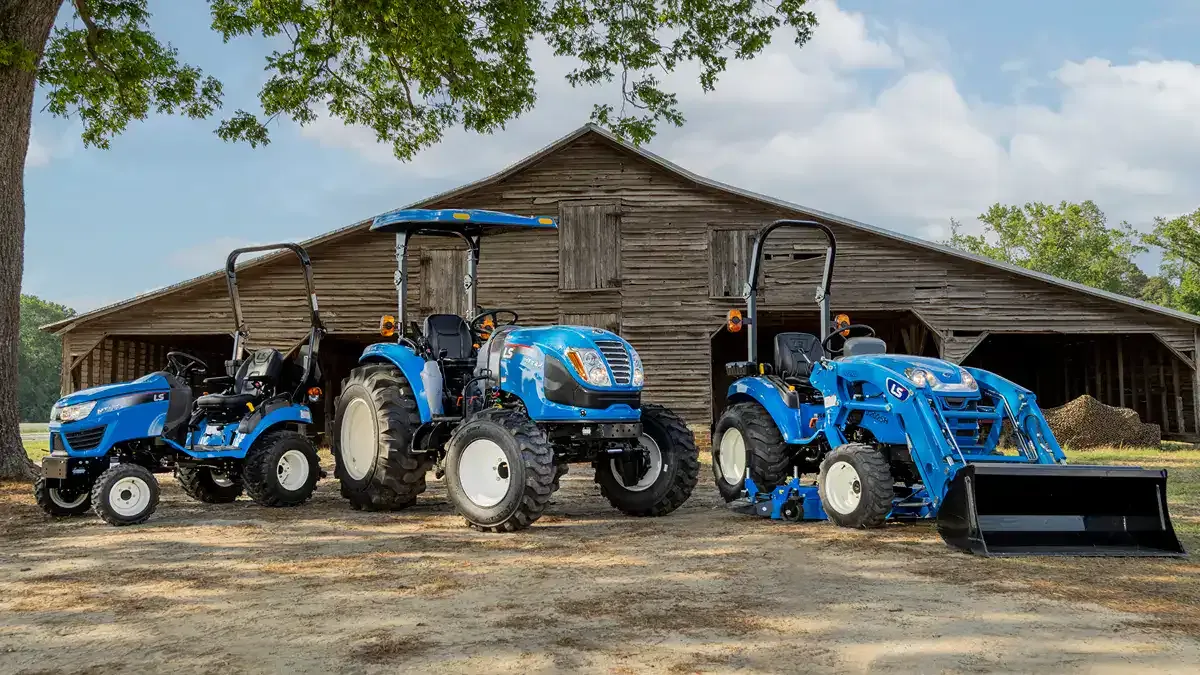
The best compact tractor for Pacific Northwest properties isn’t the flashiest—it’s the one that tackles your toughest jobs for small farming, year after muddy year. This guide’s for PNW folks—small farm operators, property owners, anyone wrestling with wet, hilly terrain. We’ll cut through the hype with straight talk on sizing the best tractor, must-have features, brand options, and smart buying tips, based on our 20+ years matching compact tractors to PNW conditions at our dealership, plus real experience on our own farm. Use the checklist to find your fit.
Browse our LS and KIOTI inventory
Quick Picks: Best Compact Tractors for PNW
- Best Sub-Compact (1–3 acres): KIOTI CS2520 – Nimble, ~1,062 lb lift for tight PNW lots
- Best Small Frame Compact (3–10 acres): KIOTI CX2510 – Versatile, ~1,100 lb lift for small farms
- Best 25 HP Full-Size Compact: LS MT226HE – Top value, ~1,965 lb lift for rugged PNW tasks
- Best 35 HP Value: KIOTI CK3520SE HST – Strong lifts, budget-friendly for mid-sized properties
- Best Full-Size Workhorse: LS MT342H – Heavy-duty power, ~2,000 lb lift for demanding tasks
- Best Premium Cab: KIOTI DK5320SE HST – Spacious, ergonomic cab for long PNW workdays; alternatives like Kubota Grand L60 or John Deere 3 Series offer similar comfort at a higher cost
Note: Verify model availability and specs with our inventory before purchase.
What is a Compact Tractor?
A compact tractor is a versatile, diesel-powered machine (15–60 HP) built for small farms and properties, handling tasks like mowing, hauling, grading, and brush clearing with implements like buckets, forks, or grapples. Smaller than full-size tractors, they offer agility and power for PNW’s tight spaces and tough terrain.
Stop Sizing by Acreage—Size by Tasks and Terrain
Acres alone don’t cut it; your tasks and PNW’s soggy, hilly ground call the shots for tractors. Three acres with steep slopes and blackberry vines need more grit than 10 flat acres of grass. PNW small farming deals with challenges generic advice skips.
Capability Tiers That Matter
Sub-Compact Tractors (15-25 HP)
- Best for: 1-3 acres, tight spots, basic chores
- Loader lift capacity: ~600-1,000 lbs (mulch, not hay bales)
- Reality check: Fine for mowing, weak for heavy PNW brush
Small Frame Compact Tractors (25-35 HP)
- Best for: 3-10 acres, versatile tasks, newbies
- Loader lift capacity: ~1,100 lbs (small round bales, easy)
- Sweet spot: Most PNW properties needing real capability
Mid-Size Compact Tractors (35-45 HP)
- Best for: 10-20 acres, demanding tasks, pro use
- Loader lift capacity: ~1,500-2,000 lbs (pallets, big bales)
- Handles: Serious brush clearing, land shaping
Heavy Compact Tractors (45-60 HP)
- Best for: 20+ acres, heavy duty tasks, utility work
- Loader lift capacity: 2,500+ lbs (most anything you’ll face)
- Power: Larger tractor muscle in a compact size
20% Horsepower Rule: As a practical guide, add ~20% to flat-ground horsepower recommendations. Hills and wet PNW conditions eat power fast.
Loader Reality Check (What Spec Sheets Won't Tell You)
Loader ratings are listed at the pivot pins—where the quick-attach system mounts to the loader arms, just behind even the bucket itself. That number’s handy for comparing tractors, but it’s not what you’ll safely lift with heavy loads out front in a bucket or on pallet forks. The farther forward the load (like holding a 5-gallon water bucket with your arm extended vs. close to your side), the less you can lift due to leverage and balance. Ignore this, and you’re risking tip-overs or busted gear.
Real-World Loader Math
- 1,500 lb pivot-pin rating: ~1,000 lbs safe in bucket with weight forward
- 2,000 lb pivot-pin rating: ~1,300 lbs safe forward of pins
- Pallet forks: Drop safe capacity another 20-30%
Lift height’s just as key—think loading trucks or stacking high. Don’t skimp.
Resource: Front-end loader safety checklist (University of Maine)
Ballast Strategy for PNW Conditions
Ballast like beet juice-filled tires (we install it—won’t freeze or corrode) or a rear ballast box keeps the rear planted on slopes. Skid Steer Quick-Attach (SSQA) systems let you swap buckets to forks to grapples fast, adding versatility to tractors.
Transmission Choices That Match Operators
Hydrostatic (HST): Foot-pedal, infinite speeds, perfect for families or loader-heavy tasks. Less fuel-efficient but easy on varied PNW jobs.
Power Shuttle: Gear efficiency with hydraulic shifts. Solid for experienced operators with lots of loading.
Shuttle Shift: Cheapest, most fuel-sipping, but needs clutch skills—not great if multiple folks handle tasks.
HST’s our pick for PNW’s slopes and mud—safe and simple.
Traction: Tires + Weight > Peak Horsepower
Horsepower’s great, but weight and grip drive safe lifting capacity and the ability to push or pull heavy loads, anywhere—PNW mud or not. A heavier 30 HP tractor with better traction outlifts and outpulls a lighter 35 HP one in wet slop, keeping you stable and productive.
Tire Selection for PNW Success
- R14 Hybrid Tires: Default for compact tractors under 50 HP. Good grip, turf-friendly, great in rain, tough on mixed ground.
- R1 Agricultural Tires: Max traction for fields, slim for gates, but they’ll chew lawns.
- Turf Tires: Golf-course grass only. Useless in mud or hills—skip ’em.
Four-wheel drive is a must for PNW’s wet springs, clay soils, and hills.
Brand & Model Snapshots
| KIOTI CS | Tough Korean build, great support, no DPF under 25 HP | First-timers, 3-10 acres | CS2520: ~1,062 lb lift vs. others’ 600-800 lbs | | LS MT2/MT2E | Top value, smart features, strong lifts | Budget-savvy small farmers | MT226HE: 1,965 lb lift, no DPF, same factory as New Holland | | John Deere 1025R | Easy quick-attach, dealer network | Brand fans | Solid John Deere tractor, pricey, 570 lb loader | | Kubota L2501/L3901/L3902 | Reliable, versatile, strong value from Kubota Tractor Corporation | Value-conscious farmers | L2501: 1,131 lb lift; L3902: 1,506 lb lifts | | Kubota Grand L60 Series | Comfy, advanced, strong engines | Long-hour users, tough tasks | Premium Kubota compact tractors, higher cost | | Kubota L6060 | 60 HP, roomy cab, powerful engine | Pros, big properties | Top-tier Kubota tractor | | New Holland Workmaster 25S | Reliable, fair price, simple | Value hunters | Good option, solid support | | Mahindra 1600 Series | Durable, budget-friendly | Cost-focused farmers | Competitive compact tractor market pick |
KIOTI and LS deliver max value and PNW grit—same brands we trust on our farm. Kubota compact tractors offer premium comfort; John Deere compact tractors bring reliable performance with dealer reach.
See in-stock LS compact tractors | See in-stock KIOTI compact tractors
New vs. Used & Total Cost of Ownership
In today’s compact tractor market, the best compact tractor isn’t the cheapest—it runs reliably with low long-term costs for small farms, with fuel efficiency saving cash over decades.
The 4-5 Year Sweet Spot
Used tractors with warranty left save on depreciation while delivering backed-up gear.
Total Cost Reality
- Uptime: Downtime in peak season kills savings.
- Dealer support: Fast parts and techs beat brand hype.
- Resale: Quality tractors hold value; junk doesn’t.
- Fuel efficiency: Modern diesels with 4WD boost hill grip 15-20%.
A solid compact utility tractor lasts 20+ years, cheaper yearly than replacing junk.
Attachments You’ll Actually Use
Look, attachments turn a good compact tractor into a do-it-all machine for your PNW property—tailored to your main tasks and terrain, with acreage giving a rough starting point for scale. We size by what you actually need to get done (like clearing wet brush or grading slopes), but yeah, bigger spreads often mean heavier work. Here’s what folks like you grab most, grouped by typical property setups.
Small Properties (1-5 acres, sub-compact tractors):
- Mid-mount mower deck for quick grass maintenance
- Loader bucket for handling mulch, light materials, or small chores
- Zero-turn mower to zip through larger lawns (complements your tractor without overlapping)
Mid-Sized Properties (5-15 acres, compact tractors for serious work):
- Pallet forks: Move lumber, hay bales, feed pallets, or awkward loads safely
- Box blade: Maintain gravel driveways and do light grading on uneven ground
- Rotary cutter: Control brush, blackberry vines, and pastures without bogging down in wet spots
Larger Properties (15+ acres, utility compact tractors for heavy-duty needs):
- Grapple: Grab and clear logs, debris, or heavy brush piles with ease on slopes
- Post hole digger: Speed up fencing projects or post-setting for small farms
Implements like these boost your tractor’s versatility without overcomplicating things—focus on what matches your toughest PNW tasks first. Check out our in-stock attachments.
Attachment Maintenance Basics
- Grease fittings monthly in use
- Check hydraulic hoses for wear, swap early
- Keep mower blades sharp to save tractor strain
- Clean and lube before winter storage
Decision Tool: 90-Second Checklist
To pick tractors for a wide range of PNW tasks, start with your toughest job:
1\. Heaviest lift: Bales? Pallets? Logs? (Sets loader capacity) 2\. Steepest slope: Gentle or serious? (Drives stability) 3\. Ground: Wet clay? Rocky? Paths? (Picks tires) 4\. Operator: Pro or family? (HST vs. shuttle shift) 5\. Hours: Weekend or daily? (Comfort needs) 6\. Attachments: Loader? Mower? Grapple? (Hydraulic setup) 7\. Budget: New warranty or used with coverage?
Output: Match tasks to a tier, then compare 2-3 models.
Why Buy from Ag-Bag: Real PNW Know-How
Since 2005, Ag-Bag Forage Solutions in Astoria, Oregon, has served PNW's compact tractor needs with KIOTI and LS—brands we use on our own farm. Our factory-trained techs understand wet-climate challenges, we stock parts for busy seasons, and we build relationships that last as long as your tractor. We've learned from real PNW work, so you get equipment that's proven in our mud and hills.
Ready to Find Your Match?
Ready to pick the best compact tractor for your PNW property?
Swing by our Astoria showroom to check out in-stock LS and KIOTI compact tractors and test attachments hands-on.
Got questions? Send us a message for free sizing advice tailored to your tasks.
Better yet, give us a call at (503) 325-2970 to talk shop with our team—we’ll help you nail the right rig.
Bonus: Oregon’s no state sales tax saves you on compact tractors.
FAQs
Sizing & Capability
Q: What size or horsepower tractor do I need for my property?
A: The best tractor matches tasks, terrain, and acreage—3 acres with hills and vines needs more than 10 flat acres. Add ~20% horsepower for PNW slopes, per our practical guide.
Q: What’s the difference between compact and sub-compact tractors?
A: Sub-compact tractors (15-25 HP) fit tight spots and light chores; compact tractors (25-60 HP) handle demanding tasks like brush clearing or heavy lifting for small farms.
Q: What types of tasks can a compact tractor handle?
A: Compact tractors mow, till, haul materials, clear snow, and more with implements like buckets, forks, grapples, or rotary cutters, offering versatility for farming jobs.
Q: What terrain considerations matter when choosing a tractor?
A: Hills, wet clay, or rocks demand four-wheel drive, R14/R1 tires, and good ground clearance for stability and grip in PNW conditions.
Features & Operation
Q: What types of transmissions are available, and which is best for me?
A: HST (easy, family-friendly), power shuttle (efficient for pros), or shuttle shift (budget, needs skill). HST suits PNW’s varied tasks and slopes.
Q: What is the lifting or towing capacity of a compact tractor?
A: Pivot-pin ratings (e.g., 1,500 lbs) drop to ~1,000 lbs with heavy loads forward in buckets or forks—check real-world capacity for your tasks.
Q: How easy is it to operate and how comfortable is a compact tractor?
A: Modern tractors have power steering, simple controls, adjustable seats, and good visibility; HST makes operation a breeze for beginners or long hours.
Ownership & Maintenance
Q: How easy is it to maintain and repair a compact tractor?
A: Monthly greasing, fluid checks, and cleaning the radiator screens keep tractors running; dealer support ensures quick parts and fixes.
Q: How reliable is service, warranty, and parts availability?
A: Quality tractors come with solid warranties; choose dealers with fast parts and trained techs to avoid downtime on small farms.
Financing & Value
Q: How much should I budget for a compact tractor, including attachments and maintenance?
A: Beyond purchase, budget for implements (e.g., $1,000-$4,000 for forks, grapples, cutters), fuel, and routine service; used models with warranty save upfront.
Q: Should I buy new or used, and what should I look for in a used compact tractor?
A: New: Full warranty, latest tech. Used: Lower cost, less depreciation—check maintenance history, condition, and warranty. Aim for 4-5 years old.
Q: What attachments are essential or recommended for my needs?
A: Match to tasks—mid mount mower decks for lawns, buckets for hauling, grapples for brush, or post hole diggers for fencing on small farms.
Q: What’s the best compact tractor for the money?
A: LS and KIOTI compact tractors nail your tasks reliably for decades, offering top value with strong dealer support and low total costs—beating pricier John Deere compact tractors or Kubota tractors in PNW conditions without skimping on power.
Written by Jeremy Linder
I grew up on a working farm with parents who manufactured machinery. I've been selling tractors and implements since 2014, and I run my own 20 acres plus help manage our family's 200-acre beef operation. Everything I recommend is something I'd put on my own property.
Get equipment tips in your inbox
No spam. Unsubscribe anytime.